Hormones and Migraine: Why Your Cycle Changes Everything
Jul 26, 2026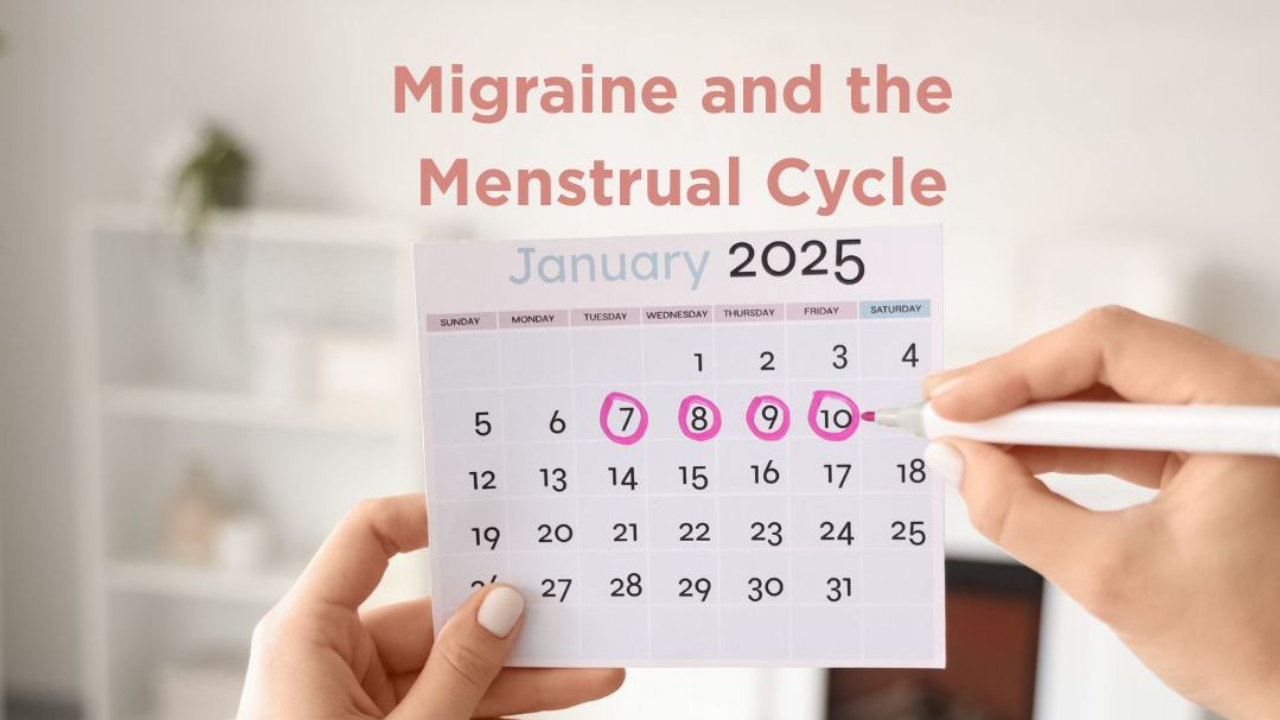
If you've noticed your migraine attacks seem to cluster around certain points in your menstrual cycle, you're not imagining a pattern that isn't there.
Hormonal fluctuation is one of the most well-established and significant influences on migraine for many women — and understanding why can help you anticipate and manage these higher-risk windows.
Why Women Are More Affected
Migraine affects women significantly more often than men, and hormones are a major reason why.
Oestrogen, in particular, has a complex relationship with the nervous system, and the sharp drop in oestrogen that occurs just before menstruation is a well-recognised, potent trigger for many women.
This is why "menstrual migraine" is its own recognised pattern — attacks that reliably occur in the days just before or during a period, often linked to that hormonal drop.
Hormones Through a Threshold Lens
Rather than thinking of hormones as a single, isolated trigger, it's more useful to think of hormonal fluctuation as one of the factors that lowers your threshold during certain windows of your cycle.
In the days surrounding menstruation, when oestrogen drops, your baseline threshold may simply sit lower than it does at other points in your cycle.
This means other contributing factors — poor sleep, stress, dehydration — have a smaller margin to work with before tipping you into an attack.
The same "trigger" you might shrug off mid-cycle could be enough to cause a migraine in this more vulnerable window.
What This Means Practically
Track your cycle alongside your migraine pattern. A simple diary noting your cycle day alongside migraine occurrences can reveal whether you have a hormonally-linked pattern — useful information to bring to your doctor as well as for your own planning.
Be extra protective of your threshold during vulnerable windows. If you know certain days are higher-risk, this is the time to be especially consistent with sleep, hydration, and stress regulation — not because you can eliminate the hormonal shift, but because protecting the other factors gives you more buffer to work with.
Speak with your doctor about hormonal treatment options. There are legitimate medical strategies for menstrually-related migraine, including specific timing of certain medications around your cycle. This is a conversation worth having with your GP or a specialist if hormonal migraine is a significant pattern for you — this article is general information, not a substitute for personalised medical advice.
Don't blame yourself for "bad weeks." If you find certain weeks are simply harder, that's physiological, not a personal failing. Be gentler with your expectations of yourself during these windows.
Hormones Aren't the Whole Picture
It's worth saying clearly: hormones matter, but they're rarely the only factor.
Most people I work with find that improving their other threshold factors — sleep, stress regulation, gradual movement — genuinely reduces the severity and impact of hormonally-linked attacks, even though the hormonal shift itself can't be removed.
Where This Fits Into the Bigger Picture
Hormonal migraine is one piece of a larger threshold puzzle — which is exactly why Raise Your Threshold, my 8-week program, focuses on building genuine resilience across sleep, stress, and movement, so you have more buffer even during your more vulnerable hormonal windows.
Learn more →
Lorem ipsum dolor sit amet, consectetur adipiscing elit. Cras sed sapien quam. Sed dapibus est id enim facilisis, at posuere turpis adipiscing. Quisque sit amet dui dui.
Stay connected with news and updates!
Join our mailing list to receive the latest news and updates from our team.
Don't worry, your information will not be shared.
We hate SPAM. We will never sell your information, for any reason.
